
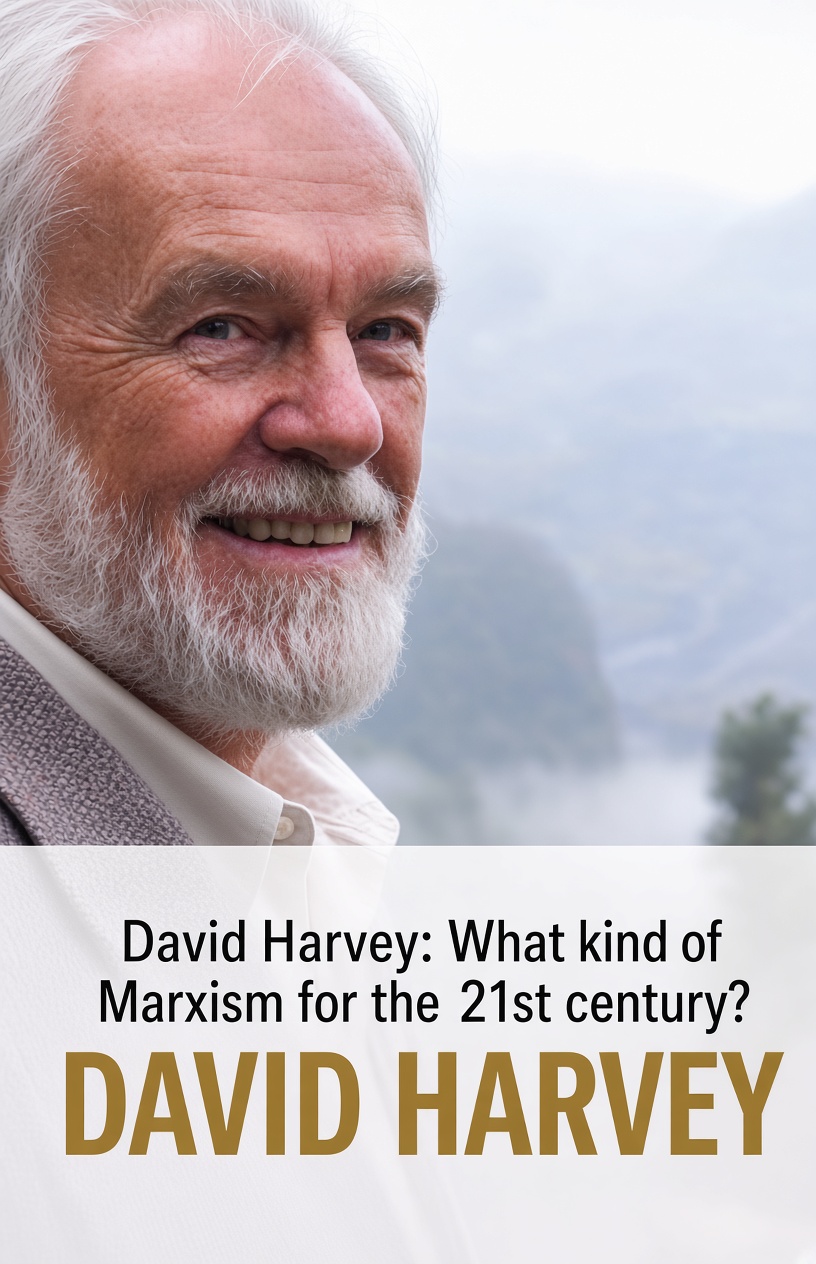
Karl Marx’s critique of capitalism was forged in the smoke-filled factories of nineteenth-century England, yet his vision was never confined to the narrow boundaries of Manchester’s mills. As David Harvey reminds us, Marx understood capitalism as a global system, one that relentlessly reshaped societies, economies, and cultures across continents. The charge of Eurocentrism often leveled against him, Harvey argues, reflects less a limitation of Marx’s thought than the historical reality of capital’s European origins and its subsequent worldwide expansion. If Marx were alive today, Harvey suggests, he would be as attentive to the dynamics of Silicon Valley and Shenzhen as he once was to Lancashire and Birmingham.
This essay situates Marx’s theoretical project within the industrial capitalism of mid-nineteenth-century Britain, while also tracing how his insights resonate far beyond that context. Marx’s reliance on factory inspectors, public health officials, and parliamentary reports gave his work an empirical depth that continues to impress. Yet Harvey shows that Marx’s conclusions, rooted in Manchester’s industrialism, were shaped by particular conditions such as the deskilling of labor, the exploitation of Irish migrants, and the ideological dominance of free trade that may not apply universally. The challenge, then, is to discern which of Marx’s “laws of motion” remain valid in today’s world of global supply chains, financial monopolies, and digital economies.
Harvey emphasizes that Marxism’s enduring strength lies not in its fixed doctrines but in its method: a materialist inquiry into the social relations of production. This approach has inspired revolutionary movements from Lenin to Cabral, each adapting Marx’s framework to their own historical circumstances. By examining the intersections of industrial capital, imperialism, and class struggle, Harvey demonstrates how Marx’s analysis anticipated the globalization of production and consumption that defines our present. From the cotton fields of the American South to the textile factories of Bangladesh, the patterns of exploitation remain strikingly familiar.
Ultimately, Harvey invites us to rethink Marxism for the twenty-first century not as a relic of Victorian England, but as a living methodology capable of interrogating the engines of contemporary capitalism. In doing so, he challenges us to recognize that the future of capital is being forged not only in the old industrial centers but across the interconnected landscapes of a globalized world.
To read this book, click this link: https://ivavalleybooks.com/wp-content/uploads/2026/09/David-Harvey-What-kind-of-Marxism-for-the-21st-century.pdf